

Two weeks ago I started building a website. As of today it serves visitors in more than over 50 countries, in over 30 languages, and shows each person products that are actually available in their own market.
I’m not an engineer. I built it part time, off the side of my desk. Total cost: around $300 in credits.
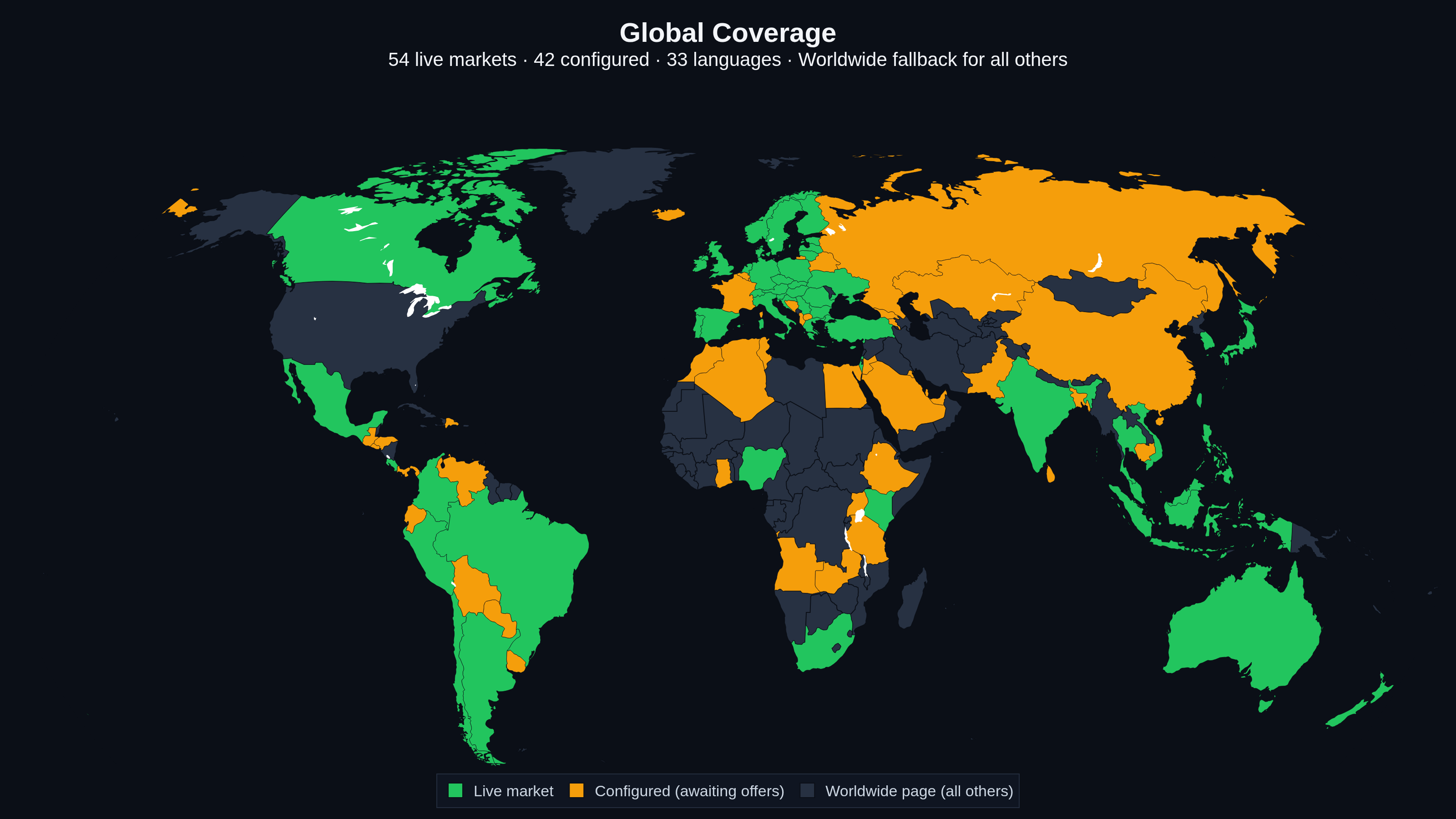
What it actually does
Someone hits the main domain. The site figures out where they are and what language they speak, then renders itself around them.
A visitor in the UK sees products available in the UK, in English.
A visitor in Brazil sees products available in Brazil, in Portuguese, with a one-tap toggle to English.
A visitor in Kenya lands in Swahili first, sees products available in their local market, and can flip to English if they want.
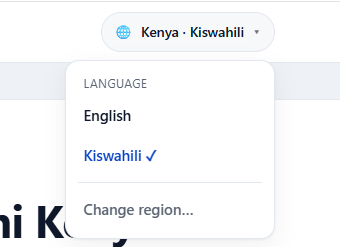
Same domain. A different site depending on where you’re standing on the planet. It’s an affiliate site, so the products matter as much as the language. Sending someone a link to something they can’t actually buy is a dead end.
How I built it
I used HyperAgent, an agent platform running on Claude, to design and build it. The site is hosted on GitHub and runs through Cloudflare.
I started small. An MVP with four countries. Get it working, watch it render correctly, then add more.
Then I iterated. And iterated. I’m on version 15 now. Each version added countries, languages, and market-specific product logic. Europe, South America, Asia, Africa. The map kept filling in.
What it cost
About $300 in credits. A couple of weeks of part-time work.
Here’s the part I keep coming back to. If I had tried to build this by hand, the old way, it would have taken me months. Honestly, I’m not sure I would have finished at all. Sixty countries of geolocation and 30-plus languages with market-specific product logic is a lot of moving parts for one non-engineer.
The coding agents did the heavy lifting. I brought the plan, the corrections, and the judgment about what to build next. The agent brought the speed.
What I learned
Start with the MVP and let the version numbers do the talking. Four countries proved the idea worked. Version 15 is what “prove it, then scale it” looks like when you don’t stop.
The bottleneck stopped being the code. It became deciding what to build next, and checking that each version actually rendered right before adding the next batch of countries.
That’s the shift I keep noticing. The hard part moved from “can I build it” to “what should I build, and is it actually working.” I’ll take that trade.
Next
Keep scaling the country and language coverage, and watch how it holds up as the map fills in. Same approach as the first four: small steps, watch the tape, add the next batch.
A note on how this got made: I talked this one out and had AI help me shape the brain dump into a post. The build, the calls, and the corrections are mine.